For decades, we dreamt of a future where all of our electronics used a standardized power connector. Most of us probably didn’t expect that USB would ultimately fill that role, but we’ll take what we can get if it means a future without getting a new wall wart for every piece of tech we buy. From soldering irons to laptops, the number of things you can power with a lowly USB cable these days is pretty incredible.
Which makes it all the more surprising it took so long for somebody to come up with a way to toggle USB devices off and on over the network. The Sonoff “USB Smart Adaptor”, which the company says will start shipping before the end of the year, is the logical evolution of their exceptionally popular mains voltage smart switches. The Smart Adapter is designed to go between the device and its existing power supply, allowing the user to drag any USB powered device kicking and screaming into their existing smart home setup. All for the princely sum of $6.50 USD.
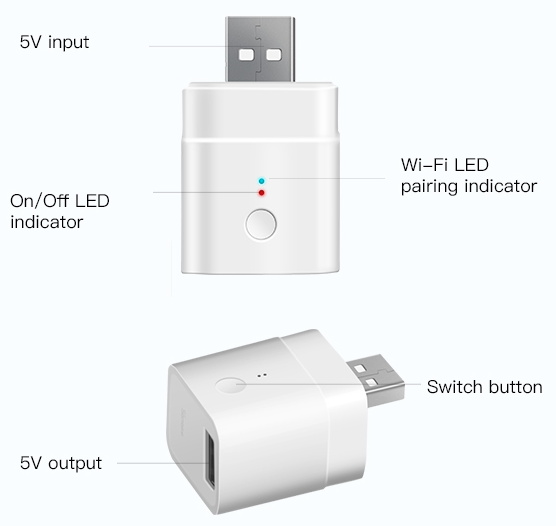 In the video after the break, Sonoff gives a few potential uses of the Smart Adapter: from controlling a string of LEDs to limiting how long a smartphone is allowed to charge for. But really, there’s a nearly limitless number of devices which could be easily and cheaply integrated into your home automation routines thanks to this gadget.
On the other end of the spectrum, those who are looking to keep a tighter control on the ears and eyes that are active in their home could use the Smart Adapter to make sure their Google and Amazon listening devices assistants are only powered up during certain hours of the day.
Unfortunately, there’s a catch. Sonoff smart switches are best known, at least among the type of folks who read Hackaday, for the fact that they’re based on the eminently hackable ESP8266 microcontroller. Given the size of this product and its intended use, it would seem logical enough to assume this device also utilizes the insanely popular chip. But according to a Sonoff representative, the USB Smart Adapter won’t be using an ESP at all; leaving its hackability an open question until people can actually get their hands on them and start poking around.
A Challenger Appears
So if there’s not an ESP heart beating at the core of this device, what is there? Sonoff says the chip is called the CKW04, which is apparently so new that there’s very little information available about it online. The best source of information we have right now is a cache of Chinese technical documents posted to GitHub by the manufacturer, CoolKit.
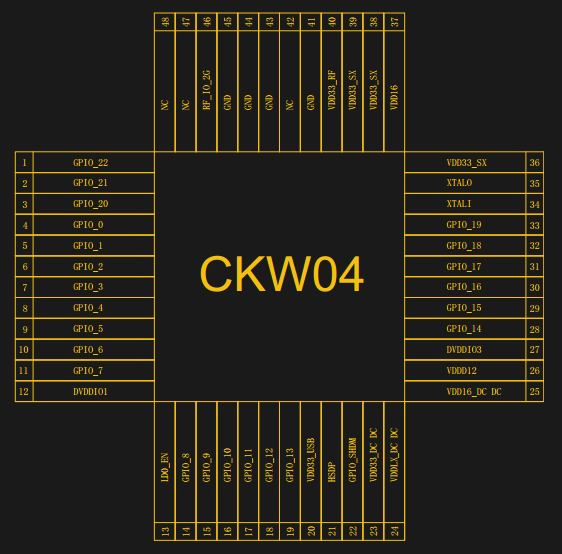 The tiny QFN-48L chip measures just 6 x 6 mm, and provides an all-in-one WiFi solution just like the ESP8266. According to the documentation, it also seems to have some sort of integrated timer functionality to trigger a dedicated GPIO pin on either a delay or a regular interval.
Whatever other advancements they made with their chip, it looks like the fine folks at CoolKit haven’t managed to improve on the ESP’s high energy consumption, though. The documents list a maximum current of 345 mA at 3.3 V, with an average energy consumption during normal operation of approximately 80 mA.
Unfortunately, it doesn’t seem like there’s any information about the software side of things, such as what the toolchain would look like to get your own firmware on the CKW04. Nor does it appear that any of the documents actually lists the chip’s specifications. Beyond the quick mention that pins 10 and 11 can be used to flash a new firmware, you wouldn’t even know the thing is programmable.
There’s plenty of hackers out there who want to write (or at least modify) the firmware that runs on their devices, and the ease with which you could do that on Sonoff’s ESP8266-based products was a definite selling point. With a new and only lightly documented chip under the hood of the USB Smart Adapter, it looks like the Sonoff hacking community is going to have to play catch up.
But who knows? The success of the ESP8266, originally intended as little more than a WiFi to serial bridge, took everyone by surprise. Perhaps by this time next year, the CKW04 will be the hot new MCU that everyone’s hacking on.
from Hackaday https://ift.tt/37cdhfX
Comments
Post a Comment