Nigerian founder Sim Shagaya is back with a new startup — uLesson — that has raised a $3.1 million seed round led by TLcom Capital.
The venture is integrating mobile platforms, SD cards, culture-specific curriculum and a network of tutors to bridge educational gaps for secondary school students in Nigeria and broader Africa.
Founded in 2019 by Shagaya — who also founded Nigerian e-commerce startup Konga and ad venture E-Motion — uLesson is headquartered in Lagos with a production studio in Jos.
The startup has been in development phase and plans to go to market in February 2020 in Nigeria, Ghana, Sierra Leone, and Gambia — Shagaya told TechCrunch on a call.
“We’re targeting Anglophone West Africa…for a market of effectively 300 million people,” he said.
On product demand, Shagaya notes the priority placed on education across West African households vs. structural deficiencies — such as student teacher ratios as high as 1:70 in countries such as Nigeria.
“We have this massive gap…We’re adding more babies in this country nominally than all of Western Europe…Even if the [Nigerian] government was super efficient, it couldn’t catch up with the educational needs of the young people that are coming up,” Shagaya said.
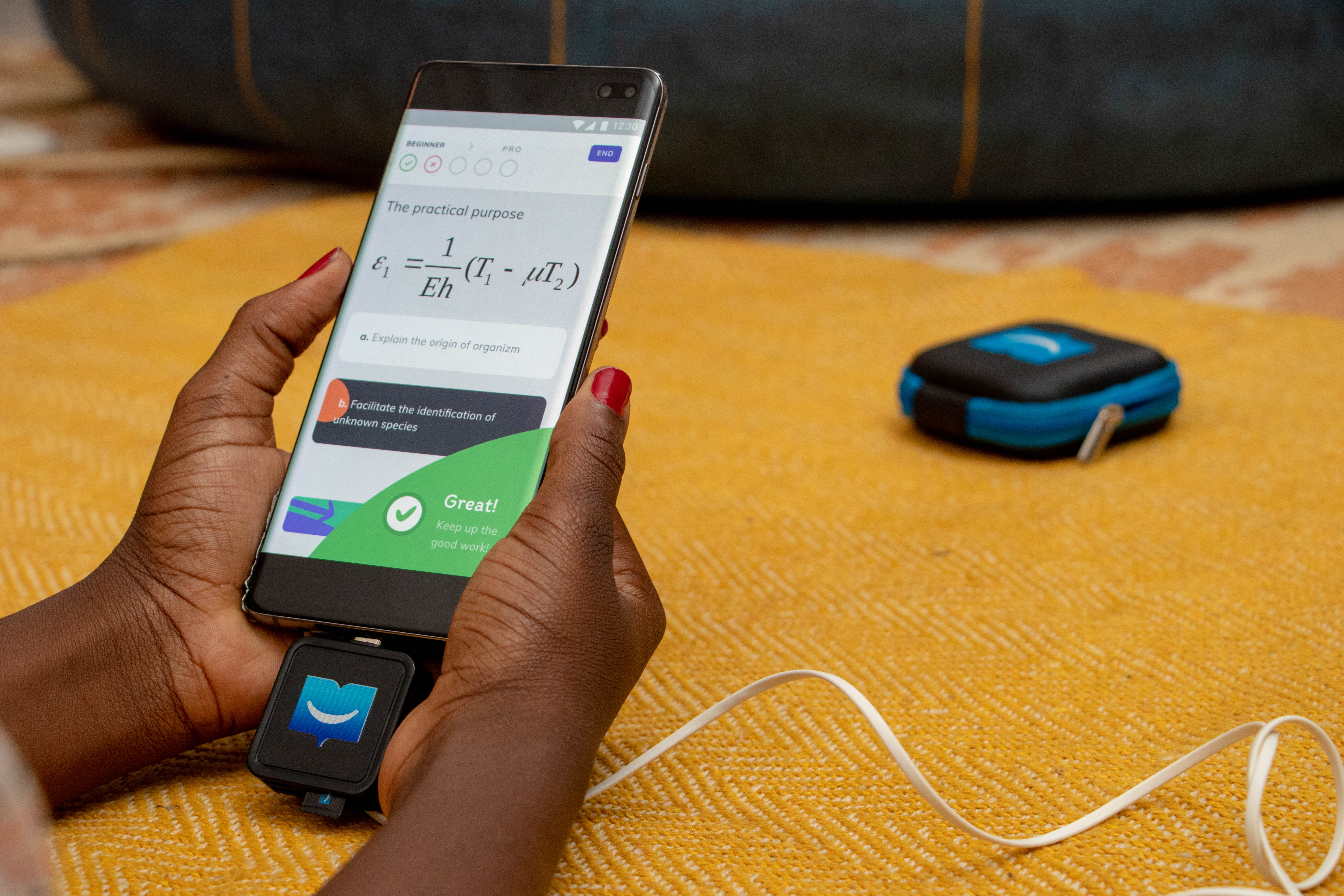 To address this, uLesson will offer an app-based home education kit for students with an up-front yearly subscription price of around $70 and the option to pay as you go. The startup’s product pack will contain a dongle, SD card, and a set of headphones to connect to Android devices.
Curriculum on the uLesson program will include practice tests and tailored content around math, physics, chemistry, and biology. The venture has already created 3000 animated videos for core subjects, according to Shagaya.
To leverage high android mobile penetration in Africa — and minimize data-streaming costs — uLesson content and performance assessment will come via a combination of streaming and SD cards.
Parents and students can connect online temporarily to update the app and sync curriculum and results, while operating off-line for the bulk of lessons.
Shagaya likened the use of SD cards to the old Netflix model of sending and returning DVD’s by mail, prior to faster and more affordable internet service in the U.S.
The uLesson program will also package a human component. The startup plans to deploy a network of counselors in major distribution areas to instruct on how to use app and follow lesson plans.
uLesson is to be a supplement to secondary school education and a more affordable and effective alternative to private tutors, explained Shagaya.
After taking uLesson to market in Africa’s most populous nation — Nigeria — and other countries in the region, Shagaya and team plan to adapt the product for a future East Africa launch.
In both Nigeria and Kenya uLesson will face competition from existing ventures. Edtech in Africa doesn’t have as many companies (or as much VC funding) as leading startup sectors fintech and e-commerce, but there are a number of players.
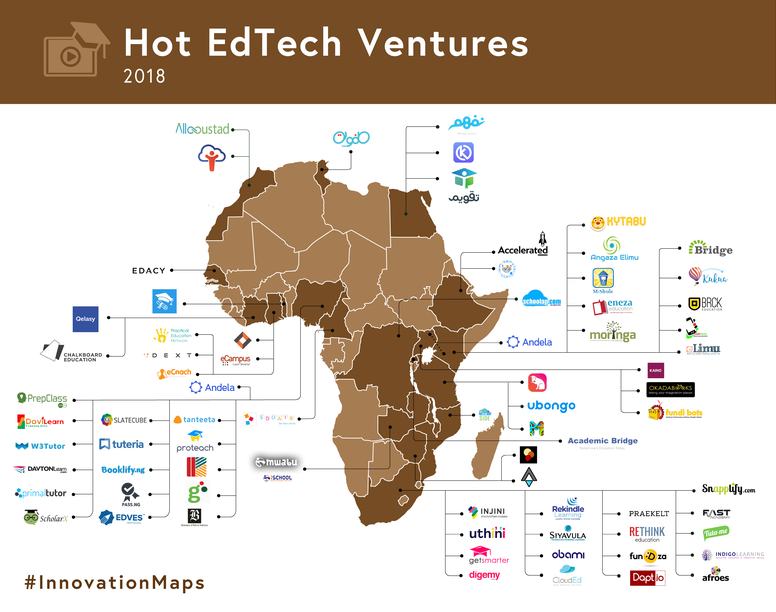
Source: Briter Bridges
Nigeria has online edu startups, such as Tuteria. Feature phone based student learning company Eneza Education has scaled in Kenya and expanded to Ghana.
uLesson could count having Shagaya as CEO as one of its advantages in the edtech space. The venture marks the founder’s return to the startup scene after a hiatus. Shagaya earned a Harvard MBA and worked for Google before repatriating to Nigeria to found several digital companies.
His best known venture, Konga, went head to head with online retailer Jumia in pioneering e-commerce for Nigeria and Africa. Konga was sold in a distressed acquisition in 2018.
Shagaya successfully exited his digital advertising venture E-Motion this year, after it was purchased by Loatsad Promedia.
The Nigerian tech entrepreneur confirmed he’s redirected some of that windfall into uLesson’s $3.1 million seed-round. As part of TLcom’s lead on the investment, partners Omobola Johnson and Ido Sum will join uLesson’s board, Sum confirmed to TechCrunch.
For his part, Sim Shagaya underscores the for-profit status of his new startup, while noting it carries greater meaning for him than past commercial endeavors.
“If you drill down to it all, all our problems in Africa are tied this problem of education…If we do this right, our impact will be huge. For me this is probably the most important work I’ll do,” he said.
from TechCrunch https://ift.tt/2XNnwUp
Comments
Post a Comment