After a long hiatus, the MIT Electronic Research Society, better known as MITERS, has released their summer 2019 edition of the MITERS Journal, officially known as Volume 43 Issue 1.
The latest edition features a throwback to the first journal published in 1976, showing that some things just never change:
“What is MITERS? MITERS is the MIT Electronic Research Society, a non-profit, student-run laboratory for MIT’s EE hackers. The Society provides work space, tools, low-cost parts and information to any number of the MIT community. We have a few good ‘scopes, various and sundry pieces of test equipment, a b’zillion power supplies, and Bertha, our beloved PDP-7 computer. (No snickers from the peanut gallery, please. Bertha is very sensitive.) We also have the most incredible plunder-trove on campus.”
– 1976 Journal 1 Number 1
The space remains a member-run project space and maker shop, providing the MIT community with access to tools, knowledge, and room to build projects.
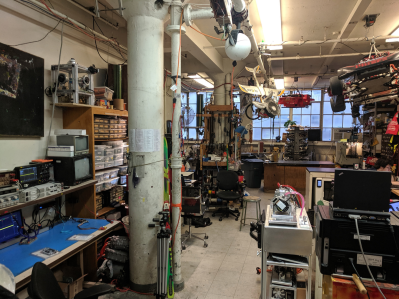
While the journal was initially used as a way to facilitate intra-society communication through minutes, notes, and featured projects, the journal has since undergone changes to be used primarily as a guide for informing members about updates and projects, as well as sharing recent news with the MITERS alumni network. Issues are planned per semester, focusing on promoting member projects, announcing new equipment or tools, advertising upcoming demos or events, and any other interesting topics or stories from members.
Currently, MITERS posts their open hours on their door Twitter, and boasts a constantly changing shop space with electric vehicles hung up to the ceiling, crazy contraptions strewn across work benches, and hackers working away at ideas throughout the night.
The latest issue highlights a world-record breaking Rubik’s Cube solving robot built by MITERS members [Ben Katz] and [Jared Di Carlo], in-house dynamometers for measuring the mechanical power output of motors, a CNC-routed wooden engineering tool case by [Andrew Birkel], and a reaction wheel inverted pendulum built by [Nancy Ouyang].
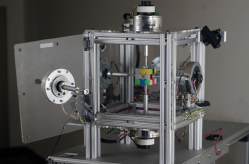
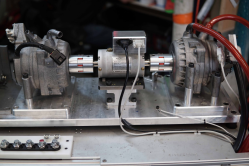

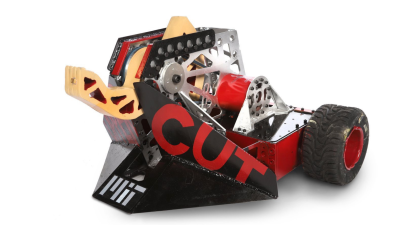
Most notably, the issue features a detailed description of Uppercut, the newest Battlebots team to come out of the space. Made up of entirely undergraduates, the team went on to compete in the latest season of the show, which features 250lb robots destroying one another in a large polycarbonate arena.
The bot consists of a 50lb AR500 (abrasion resistant steel) vertically spinning blade spinning at 3000 rpm, with a tip speed of 200mph. An aluminum housing holding the batteries, drive motors, motor controllers, and drive wheels was CNC milled, while the front holding the weapons and wedges was welded from steel.
We’re excited for future projects from the space, and to see the ongoing legacy of the MITERS journal continued!
from Hackaday https://ift.tt/2lFhZRo
Comments
Post a Comment